
Listening to the Body: What Yoga Taught Me About Mental Health


When most people think of yoga, they picture flexibility, balance, or a quiet studio. When most people think of mental health, they imagine thoughts and emotions. In reality, the two are deeply connected. Our mental life does not exist separately from the body that carries it.
Over the past few years, I have been completing a 200-hour yoga teacher training. I didn’t begin the training because I expected yoga to “clear my mind” or make stress disappear. In fact, one of the most important lessons I learned is that yoga is not about the cessation of all thoughts. The mind does what minds do—it produces thoughts constantly. Instead, yoga invites us to notice them, let them pass, and gently return our attention to the body.
That shift—from controlling the mind to listening to the body—can be surprisingly powerful.
In counseling, we often talk about thoughts, beliefs, and emotions. But those experiences are not just mental. Anxiety may appear as a racing heart or tight chest. Stress can show up as headaches, shallow breathing, or muscle tension. Even shame or self-criticism often shows up physically: slumped posture, fatigue, or a sense of heaviness.
Research increasingly supports what many yoga traditions have long emphasized: the body and mind constantly influence each other. Practices that involve breathing, movement, and body awareness can help regulate the nervous system and reduce symptoms of stress, anxiety, and depression. Mindfulness-based practices and yoga have been shown to improve emotional regulation, decrease stress hormones, and increase feelings of well-being.
One aspect of yoga that struck me during training was how it encourages curiosity about the body rather than judgment of it. In many areas of life, we evaluate our bodies—how strong they are, how flexible they are, how they look. In yoga, the invitation is different: pay attention to what your body is telling you.
Some days your body feels energized. Other days it feels tight, tired, or distracted. The practice becomes less about achieving a pose and more about developing awareness.
This awareness matters for mental health because the way we relate to our bodies often mirrors the way we relate to ourselves. If we approach our bodies with criticism, impatience, or unrealistic expectations, those same attitudes often show up in our inner dialogue. Learning to approach the body with patience and curiosity can gradually change how we treat ourselves more broadly.
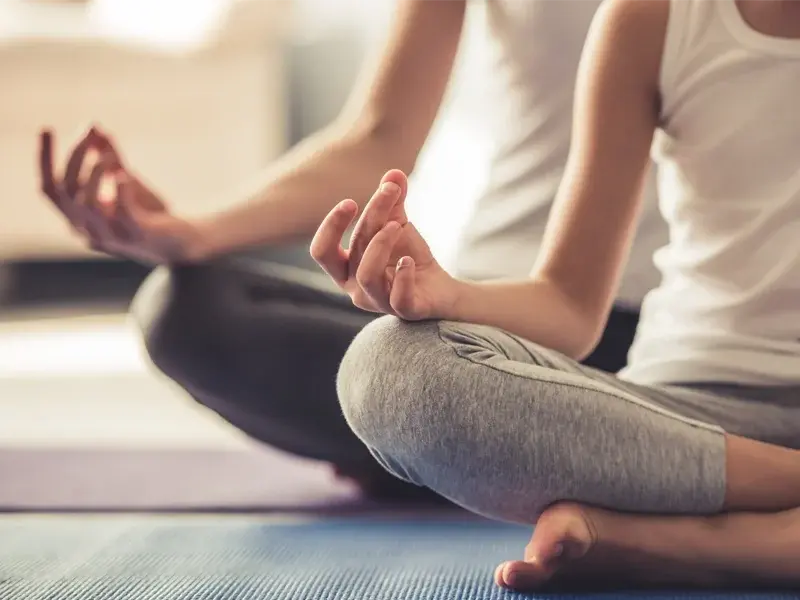
Yoga also teaches an important psychological skill: letting go. Not forcing relaxation. Not eliminating thoughts. Simply noticing what is happening and allowing space around it.
That skill—allowing rather than fighting experience—is central to many modern therapeutic approaches as well.
So what can we take from yoga, even if we never step into a yoga class?
Here are three practical tools supported by research on mindfulness and nervous system regulation:
1. Use the breath as an anchor. Slow, intentional breathing signals safety to the nervous system. One simple practice is to inhale through the nose for four seconds and exhale for six seconds. A slightly longer exhale helps activate the body’s relaxation response. Even two or three minutes can help shift the body out of a stress response.
2. Check in with the body during stressful moments. When stress rises, many of us go straight into thinking mode—trying to analyze or solve the problem. Instead, pause and ask: What is happening in my body right now? Notice your shoulders, jaw, breath, and posture. Simply identifying tension and softening those areas can reduce the intensity of the stress response.
3. Practice curiosity rather than judgment. Whether in movement, exercise, or daily life, try replacing self-criticism with curiosity. Instead of “Why can’t I do this?” try “What is my body telling me today?” This shift may sound small, but it encourages a more compassionate and sustainable relationship with ourselves.

Yoga ultimately reminds us that mental health is not just about changing thoughts. It is also about learning to listen—to our breath, our bodies, and the signals that tell us when we need rest, movement, or care.
In a world that often asks us to push harder and move faster, that kind of listening can be a powerful practice.


Comments